


Your No-Nonsense Guide to Red Light Therapy
Remember from science class that the mitochondria are the powerhouse of the cell?
For once, that line is actually useful here.
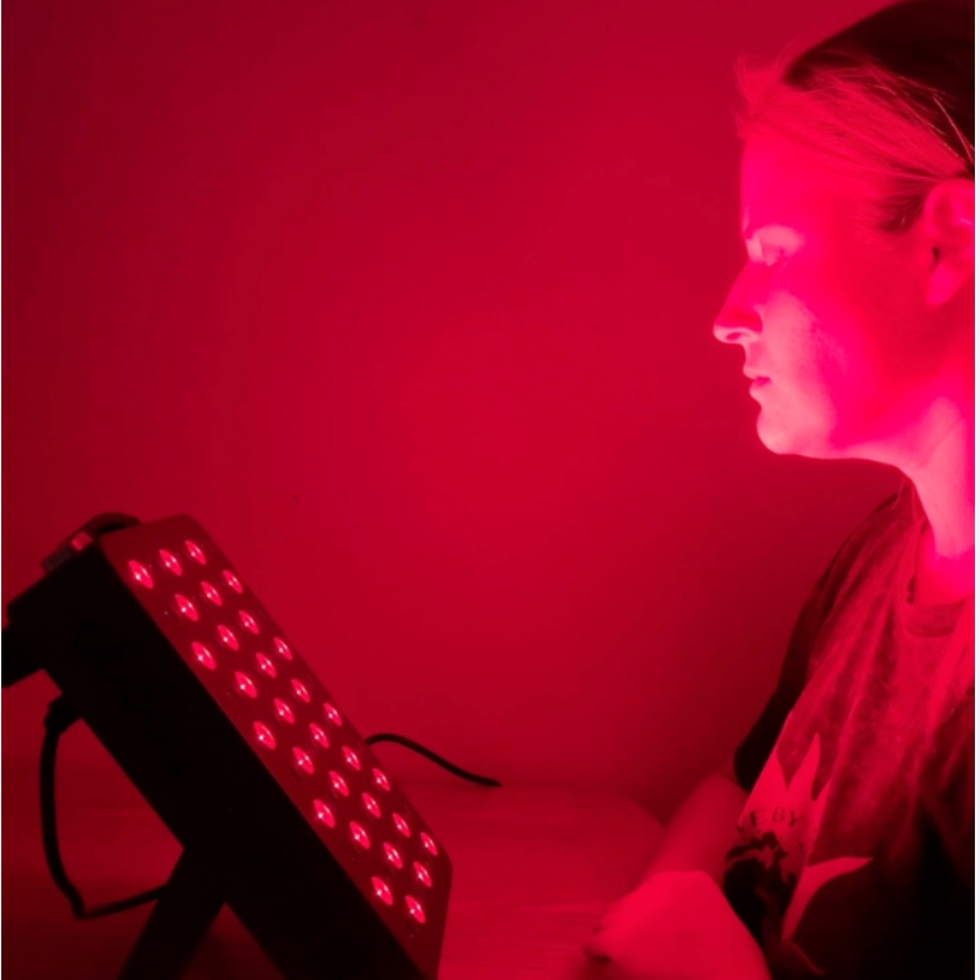
Red light therapy works by exposing the body to specific wavelengths of red and near-infrared light. These wavelengths appear to interact with parts of the cell involved in energy production. The leading theory is that this may help cells produce energy more efficiently. Researchers believe one of the key players here is an enzyme called cytochrome c oxidase. Don’t worry, there will be no quiz on this ;)
The simple version is this: red light may help your cells produce energy more efficiently, which may support repair, recovery, and overall function.
This is why red light therapy has been studied for a range of things, including skin health, wound healing, inflammation, pain, muscle recovery, hair growth, and more. Anecdotally, I am a big fan from results I’ve seen both personally and using red light therapy in specific cases with clients. It’s also important to remember: tools like this don’t override your physiology. If energy intake, recovery, sleep, and stress are off, those will still be the primary drivers of how you feel and perform. It is not a replacement for the basics. But it can be a useful tool.
If you have been curious about red light therapy, this is the practical version: what it is, how it works, where it may help, and what you need to know before buying a device.
What red light therapy is
Red light therapy, also called photobiomodulation, uses low levels of red and near-infrared light to stimulate cellular activity. Unlike UV light, it does not tan the skin or create the same kind of damage associated with sun exposure.
The goal is not heat. The goal is light delivered at the right wavelengths and dose.
In general:
Red light tends to be used more for skin-level concerns
Near-infrared light penetrates deeper and is often used for muscles, joints, and deeper tissues
Many quality devices use a combination of both.
How it works in plain English
Your cells need energy to do everything from repair tissue to manage inflammation to grow hair to support healthy skin. That energy is made in the mitochondria. Red and near-infrared light appear to help those mitochondria work more efficiently. One proposed mechanism is that light interacts with cytochrome c oxidase, which is part of the energy-making machinery inside the cell. When that process works better, cells may be better able to repair, recover, and function the way they are supposed to. Again, you do not need the biochemistry degree version. Just know this: red light therapy is thought to support cellular energy production, and that is why it may have benefits across several systems.
What red light therapy may help with
1. Skin health and aging
This is one of the most common reasons people use red light therapy. It may help support:
collagen production
skin healing
fine lines and skin texture
overall skin quality
2. Recovery, soreness, and aches
This is one of the main reasons I use it personally. It may be helpful for:
post-workout recovery
muscle soreness
aches and pains
supporting tissue repair after strain or overuse

3. Injury rehab and wound healing
There is good interest in red light therapy for healing and tissue repair. This is where consistency matters. It is not usually a one-and-done tool. It tends to work best when used regularly over time.
4. Hair growth
This is another area with promising research, especially when the right wavelengths and consistent use are involved. If hair thinning is part of the reason you are looking into red light therapy, this may be worth considering.
5. Joint discomfort and inflammation
Many people use red light therapy for joint pain, stiffness, and supporting the body’s response to inflammation. It is not a cure-all, but it may be a helpful addition to a broader plan.
6. Thyroid support
This is a more nuanced area, but worth mentioning. There is some emerging research suggesting red light therapy may be supportive in certain thyroid cases, including possible effects on thyroid antibodies and thyroid function markers. That does not mean everyone with thyroid issues needs a red light panel, and it does not replace working with your physician and knowledgeable practitioner on thyroid supportive tools and actions. Still, it is an interesting area of research and one I think we will continue hearing more about.
What a standard protocol usually looks like
This is where people tend to overcomplicate things.
A typical starting point is:
3 to 5 sessions per week
About 10 to 20 minutes per area
At the distance recommended by the device manufacturer
Used consistently for several weeks before expecting much
Think weeks, not days, when it comes to noticing changes.
A few important notes:
More is not always better
Longer sessions are not automatically more effective
Consistency matters more than doing something extreme for a week and then forgetting about it
The right dose depends on the device, the wavelength, the power output, and the goal.
Different devices can vary a lot in output, so two panels used for the same amount of time may not deliver the same dose.
What to know before buying a device
This is where I would be careful. There are a lot of cheap red light devices on the market, and not all of them are worth your money.
A few things that matter:
Wavelengths: the device should clearly list them
Power output/irradiance: this affects whether you are getting a meaningful dose
Build quality: not all panels are created equal
Transparency: if a company is vague about specs, that is a red flag
Third-party testing or clearly published specs: this is a good sign the company is confident in what they are selling
A pretty-looking device is not the same thing as an effective one.
My personal take
I use the HOOGA HG500 and have used it for aches, injury rehab, and hair growth.
I have also had clients use red light therapy as part of a broader support plan, including for inflammation, recovery, and thyroid-related goals.
If you want to look at the brand I use, here is my link: click here.
Bottom line
Red light therapy is not something I would put in the “must have” category for everyone. If the basics are not in place, it probably is not your best next step. Your return on effort and investment will be much higher by dialing in the basics first. But if you are looking for a tool that may support recovery, skin health, healing, hair growth, and overall cellular function, it is worth understanding.
Like most things in health, it works best when paired with the basics:
good sleep
enough protein
strength training
daily movement
stress management
realistic expectations
Disclaimer
Red light therapy can be a helpful tool, but it is not a substitute for medical care, diagnosis, or treatment. Results vary based on the person, the condition being addressed, consistency, and the quality of the device used.


Comments